What if your sketching problem isn’t talent-but the way you practice?
Most people try to improve by waiting for inspiration, buying better tools, or forcing long drawing sessions they can’t sustain. Real progress usually comes from smaller habits repeated daily.
A five-minute gesture sketch, one focused observation, or a quick value study can train your hand and eye faster than occasional marathon practice. The key is building routines that make sketching feel natural, not intimidating.
In this guide, you’ll learn simple daily habits that sharpen your lines, improve your confidence, and help you turn blank pages into steady creative growth.
Why Daily Sketching Habits Build Stronger Observation and Line Control
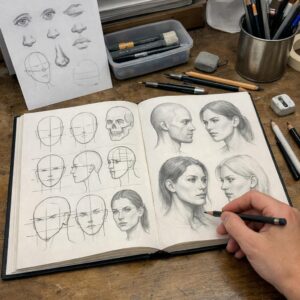
Daily sketching trains your eyes to notice proportions, angles, shadows, and small shape changes that casual looking usually misses. When you draw every day, even for 10 minutes, you start comparing distances more accurately instead of guessing. This is the foundation of better observation, whether you sketch portraits, product designs, architecture, or quick scenes in a café.
Line control improves because your hand repeats the same decisions often: where to start, how much pressure to use, when to lift the pencil, and how to simplify a form. For example, sketching the same coffee mug for a week teaches you how the ellipse changes from different angles, which is a practical skill many beginners struggle with. Short, consistent practice is often more useful than one long weekend session because your muscle memory stays active.
- Use a basic HB pencil for pressure control and clean construction lines.
- Try Procreate or a Wacom Intuos tablet if you want digital sketching practice with undo, layers, and brush control.
- Compare your sketch to the subject before erasing; the mistake usually shows you what to study next.
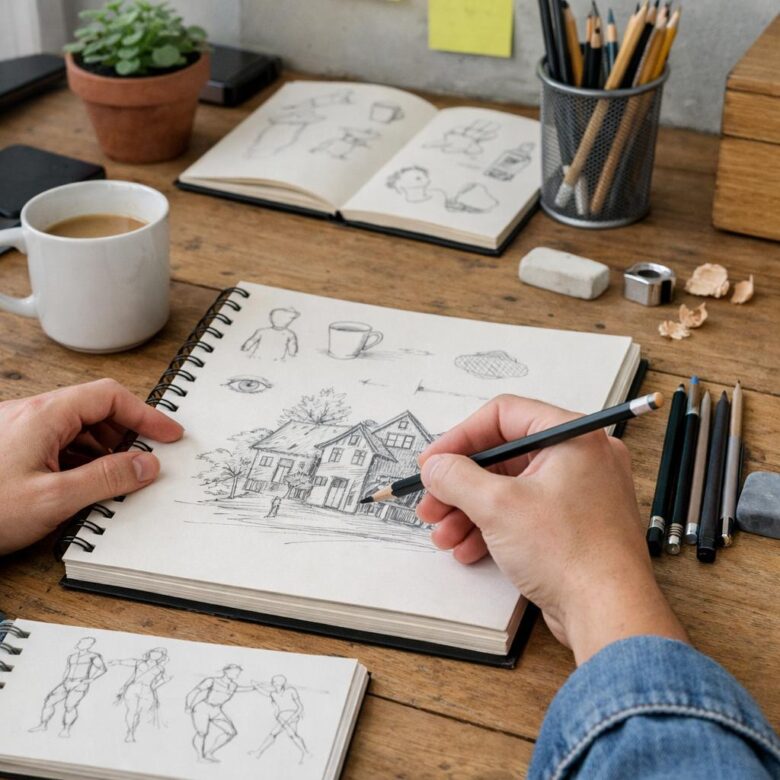
A real advantage of daily practice is that it lowers the “startup cost” of drawing. You stop waiting for perfect tools, expensive online art classes, or a large block of free time. A small sketchbook, a reliable drawing tablet, or even a phone-based reference app can turn ordinary moments into steady skill-building sessions.
Simple Daily Sketching Exercises to Improve Proportion, Shape, and Shading
Set aside 15-20 minutes a day for focused sketching drills instead of trying to finish a full artwork. The goal is to train your eye to measure accurately, simplify complex objects, and control light values with basic art supplies or a digital drawing tablet.
- Proportion drill: Choose one object, such as a coffee mug, shoe, or desk lamp, and sketch it using light measuring lines. Compare the height, width, handle size, and negative spaces before adding details.
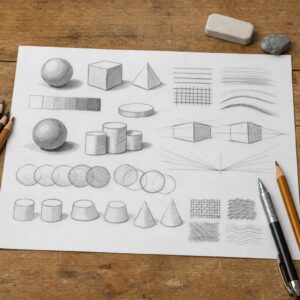
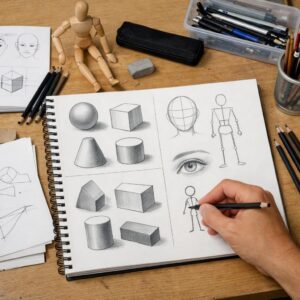
- Shape drill: Break real objects into simple forms like boxes, cylinders, cones, and spheres. This builds stronger structure, especially if you want to improve figure drawing, product sketching, or concept art.
- Shading drill: Draw a small value scale from light to dark, then apply it to one simple object under a single lamp. Focus on the highlight, midtone, core shadow, reflected light, and cast shadow.
A practical example: place an apple beside a white cup and sketch them for ten minutes using only three values-light, middle, and dark. This forces you to see the big shadow pattern first, which is often more useful than blending every tiny detail.
If you prefer digital practice, tools like Procreate on an iPad or a Wacom drawing tablet can help you repeat exercises quickly without paper waste. Still, keep the setup affordable and simple; better proportion and shading come from consistent observation, not expensive art equipment alone.
How to Track Progress and Avoid Common Sketching Practice Mistakes
Track your sketching progress the same way a fitness coach tracks workouts: record what you practiced, how long it took, and what needs improvement. A simple folder in Google Drive, a dated sketchbook, or an app like Procreate can help you compare older drawings with recent ones and spot real growth in line control, proportions, shading, and composition.
One practical method is to redraw the same object every two weeks. For example, sketch your coffee mug from the same angle, using the same pencil or digital drawing tablet, then compare the edges, ellipses, and shadow placement. This shows progress more clearly than judging random sketches, which often leads to frustration.
- Save your warm-ups: They reveal whether your hand control and confidence are improving.
- Write one note per session: Focus on a specific issue, such as “eyes too high” or “shading too flat.”
- Review weekly, not daily: Daily judgment can feel discouraging; weekly review gives a fairer picture.
A common mistake is buying expensive art supplies, online drawing courses, or a premium sketching app before building consistent habits. Better tools can help, especially an iPad, Wacom tablet, or quality graphite set, but they will not fix weak observation skills. Start with affordable materials, then upgrade when you understand what your practice actually requires.
Also avoid practicing only what you already draw well. If hands, perspective, or fabric folds feel uncomfortable, schedule them into short focused sessions. That targeted discomfort is usually where the biggest improvement happens.
Closing Recommendations
Improving at sketching is less about waiting for talent to appear and more about choosing a habit you can repeat tomorrow. Start small, stay consistent, and let each page show you what to adjust next. Your best decision is to make sketching easy to begin: keep tools nearby, set a short time limit, and focus on observation rather than perfection. If you only have five minutes, draw for five minutes. If a sketch feels awkward, finish it anyway. Progress comes from returning to the page often enough that confidence has no choice but to grow.