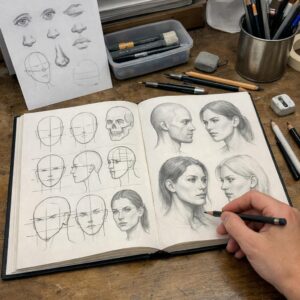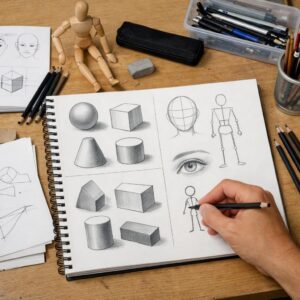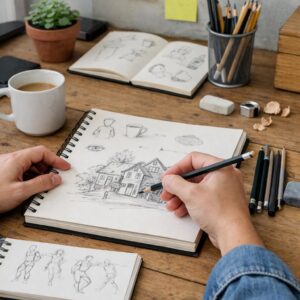
What if your “lack of talent” is really just a lack of practice?
Drawing gets easier when you stop guessing and start training your eye, hand, and patience with the right fundamentals.
Before you worry about style, realism, or expensive tools, focus on the basic drawing techniques every beginner should practice: lines, shapes, shading, proportion, perspective, and observation.
Master these skills, and your sketches will become cleaner, more confident, and far more expressive-one simple exercise at a time.
Core Drawing Fundamentals: Lines, Shapes, Proportion, and Observation
Strong drawing starts with control, not expensive supplies. Practice straight lines, curved lines, and varied line weight using a graphite pencil, fineliner, or a drawing tablet like Wacom; this builds the hand confidence needed for sketching, digital illustration, product design, and online art classes.
Break every subject into simple shapes before adding detail. A coffee mug becomes an ellipse, a cylinder, and a curved handle; a face becomes an oval with measured guidelines; a shoe becomes blocks and wedges. This approach helps beginners avoid “symbol drawing,” where you draw what you think an object looks like instead of what is actually in front of you.
- Lines: Draw from the shoulder for longer strokes, and use the wrist only for small details.
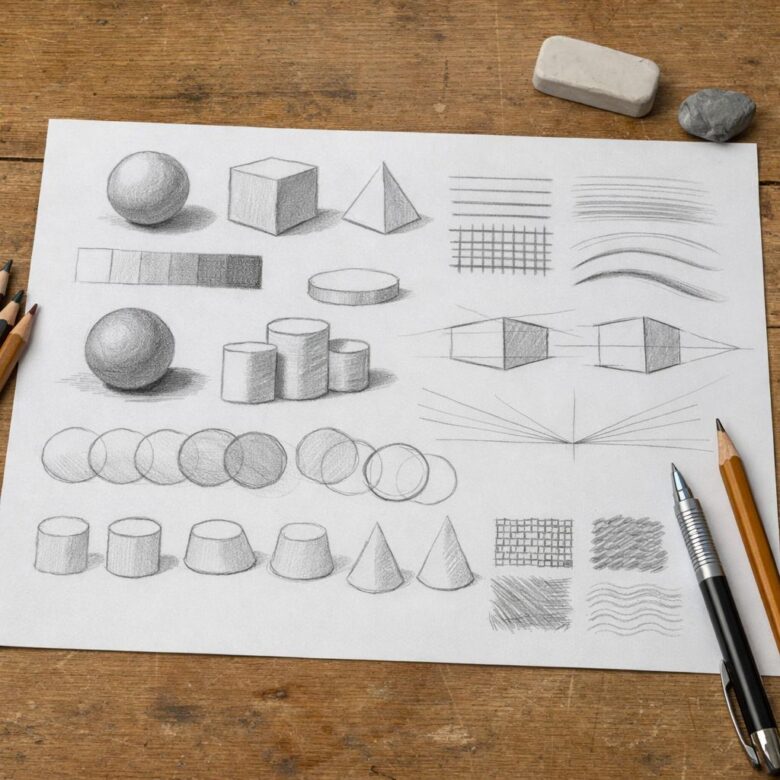
- Shapes: Practice circles, boxes, cylinders, and cones daily because they appear in almost every object.
- Proportion: Compare widths, heights, angles, and negative spaces before shading.
Observation is the skill that makes proportions more accurate. When drawing from life, hold your pencil at arm’s length to compare measurements, such as the height of a bottle against its width. In real studio practice, artists often spend more time looking than drawing because small measurement errors become obvious once shading begins.
If you use digital tools like Procreate or Photoshop, resist the urge to rely on undo too often. Use layers for correction, but still train your eye with quick sketches from real objects, photos, and simple still-life setups. Good fundamentals reduce wasted time, lower the cost of trial-and-error supplies, and make every drawing technique easier to learn.
How to Practice Basic Drawing Techniques with Simple Daily Exercises
Daily drawing practice works best when it is short, focused, and easy to repeat. Instead of trying to finish a polished artwork, spend 15-20 minutes training one skill at a time, such as line control, shading, perspective, or proportions. A simple sketchbook, graphite pencil set, kneaded eraser, and a free reference platform like Pinterest are enough to build a reliable beginner drawing routine.
Start with warm-ups before drawing anything serious. Fill one page with straight lines, curved lines, circles, and boxes, then compare the first row with the last row. In real studio practice, this small habit often reveals shaky hand pressure, uneven spacing, or rushed marks before they affect the actual sketch.
- Monday: Draw household objects like a mug, keys, or headphones to practice observation and proportions.
- Wednesday: Use a desk lamp to create strong shadows and practice basic shading techniques with pencils.
- Friday: Sketch a simple room corner to understand one-point perspective and depth.
For better results, keep your exercises measurable. For example, draw the same coffee cup for five days from different angles, then review the changes in accuracy, line quality, and shadow placement. If you use a drawing tablet such as a Wacom device or an app like Procreate, save each practice file so you can track progress without guessing.
The key is consistency, not expensive art supplies. Ten careful minutes every day will improve your hand-eye coordination faster than one long, unfocused session on the weekend.
Common Beginner Drawing Mistakes That Slow Your Progress
One of the biggest beginner drawing mistakes is pressing too hard with the pencil. Heavy lines are difficult to correct, and they make shading look muddy, especially when using affordable sketchbooks or basic graphite drawing supplies. Start with light construction lines, then darken only the edges you want to keep.
Another common issue is drawing details too early. For example, many beginners spend 20 minutes perfecting an eye, then realize the head shape is tilted or the proportions are wrong. Build the drawing in stages: simple shapes first, proportions second, details last.
- Skipping reference images: Use real photos, still life objects, or platforms like Proko to study anatomy, gesture, and form more accurately.
- Ignoring line quality: Practice confident strokes instead of scratching short lines; this improves both pencil sketching and digital art.
- Using the wrong tools too soon: A digital drawing tablet or apps like Procreate can help, but they will not fix weak observation skills.
From real practice, I’ve noticed beginners improve faster when they review their old sketches instead of constantly starting random new ones. Compare your drawing to the reference, mark what feels off, and redraw that specific part. This makes online drawing lessons, art courses, and even premium drawing software much more useful because you know exactly what skill you are trying to improve.
Key Takeaways & Next Steps
Becoming better at drawing is less about talent and more about choosing the right practice consistently. Start with simple exercises you can repeat daily, then gradually challenge yourself with more complex subjects as your control and observation improve. Do not rush into perfection; focus on clean progress, patient correction, and building confidence one sketch at a time. If you feel stuck, return to the basics-they are not beginner limitations, but the foundation of every strong artist. Keep your sketchbook active, review your work honestly, and let steady practice guide your next step.